The 5 Biggest Investing Mistakes (and How to Avoid Them)
Investing mistakes can happen when a good idea gets taken too far. You get stuck on one stock. You spend more than your portfolio can comfortably support. You pay too much for the next big thing or make a decision based on something you’ve always assumed was true.
Spencer McGowan, President and Founder of McGowanGroup Asset Management, calls out five of the big ones: obsession, overspending, overpaying, gambling, and believing what “just ain’t so.”
In this NetWorth Radio Advance Report, Spencer and Alex Tollen look at those mistakes through different periods in the market. Some of the examples go back decades. Others, including AI, crypto, and leveraged investments, are much more recent.
What Are the Most Common Investing Mistakes?
Five common investing mistakes are becoming too attached to one investment, overspending, paying too much for an asset, gambling instead of investing, and making decisions based on assumptions that haven’t been checked.
- Obsession: Getting stuck on one investment, sector, or idea and having a hard time looking beyond it.
- Overspending: Your lifestyle gets more expensive than your financial plan can comfortably handle.
- Overpaying: Getting excited about a company without stopping to ask whether the price makes sense.
- Gambling: The focus shifts toward short-term bets, speculation, or leverage.
- Believing what “just ain’t so”: Assuming something is true about an investment or the market without checking the numbers.
Mistake 1: Becoming Obsessed with One Investment
Every market seems to have something investors get stuck on.
In the late 1990s, it was technology. The internet was taking off, PCs were everywhere, telecom was booming and Y2K meant another big technology buildout. There was plenty of speculation along with it.
QQQ, which tracks the Nasdaq-100, was right in the middle of that excitement.
Invesco QQQ Trust Series 1 Quarterly Candlestick Chart (Quarterly 01/01/1998 – 12/31/2018)

Courtesy of Bloomberg LP
QQQ climbed quickly around the end of the 1990s. Then came the other side of the cycle. From the high shown on the chart to the 2002 low, the decline was close to 90%. It would take roughly 15 years to reach a new high.
That’s a long time if most of your attention, or your money, is tied to one part of the market.
One question Spencer asks younger investors in particular before getting too attached to an idea: How will you know when you’re wrong? And what will you do about it?
That’s a useful rule of thumb before becoming too committed to any one investment: know what would change your mind before you need to make that decision.
Mistake 2: Overspending and Undermining Financial Independence
You can have a sizable portfolio and still spend too much.
Spencer uses a second home as an example. Say someone has around $7 million and feels pretty comfortable. A second house starts looking reasonable, even if it has to be financed.
But the price of the house isn’t really the whole question.
There is the mortgage, if there is one, plus taxes, insurance, maintenance, and everything else that comes with owning it. Alex gives an example in the video of a second home adding another $20,000 a month in carrying costs. Now the question is whether the cash flow can keep covering it.
Sometimes the answer becomes pretty obvious once you actually put the numbers into a spreadsheet.
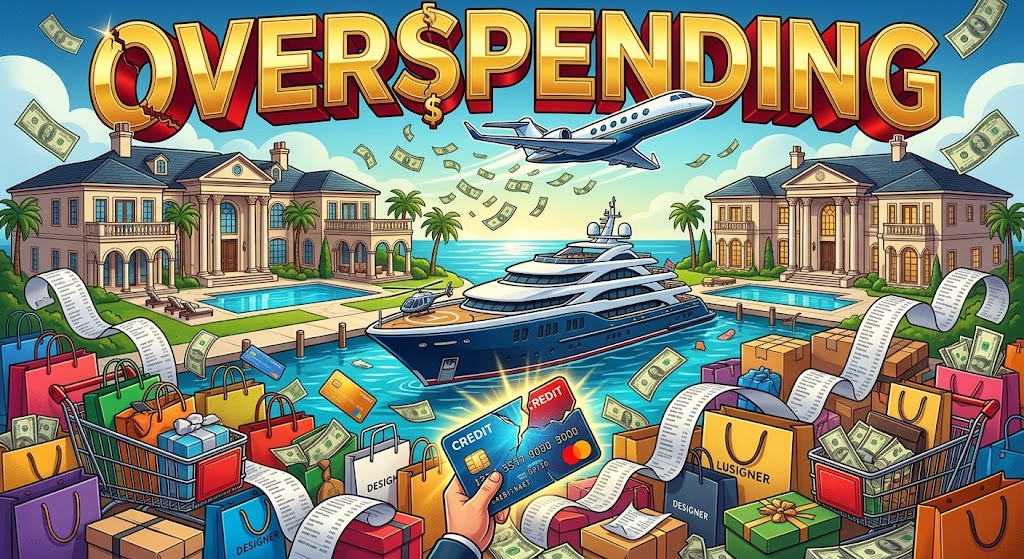
Conceptual Illustration of Financial Overspending and Debt
Courtesy Google’s Gemini AI
This isn’t only about second homes, boats, or especially expensive purchases. Regular spending matters, too. If more money has to come out every month, the portfolio has to support it.
That’s why Spencer’s advice in this part of the discussion is pretty straightforward: do the math first.
Mistake 3: Overpaying for Hot Stocks and Assets
Nuclear is getting a lot of attention, so is AI. That doesn’t answer what a company is worth.
That’s where valuation comes in.
Valuation is a way of asking whether a stock’s price makes sense based on things like the company’s earnings, sales and financial health. A margin of safety means paying a price that leaves some room for the company to perform worse than expected.
Spencer uses Oklo as one example.
Oklo Inc. Weekly Candlestick Chart, March 2024-September 2026

Courtesy of Bloomberg LP
Oklo is tied to the renewed interest in nuclear power and small modular reactors. Its stock moved quickly. The chart shows a low of 5.35 in September 2024 and a high of 193.84 in October 2025. By September 23, 2026, it was at 39.07.
In the video, Spencer keeps coming back to a pretty basic question: how much money is the company making?
That matters because a stock price can run well ahead of what a business is doing today. Investors aren’t only paying for the company as it currently exists. They’re paying for expectations about what happens next.
CoreWeave comes up for much the same reason, this time around AI and data centers.
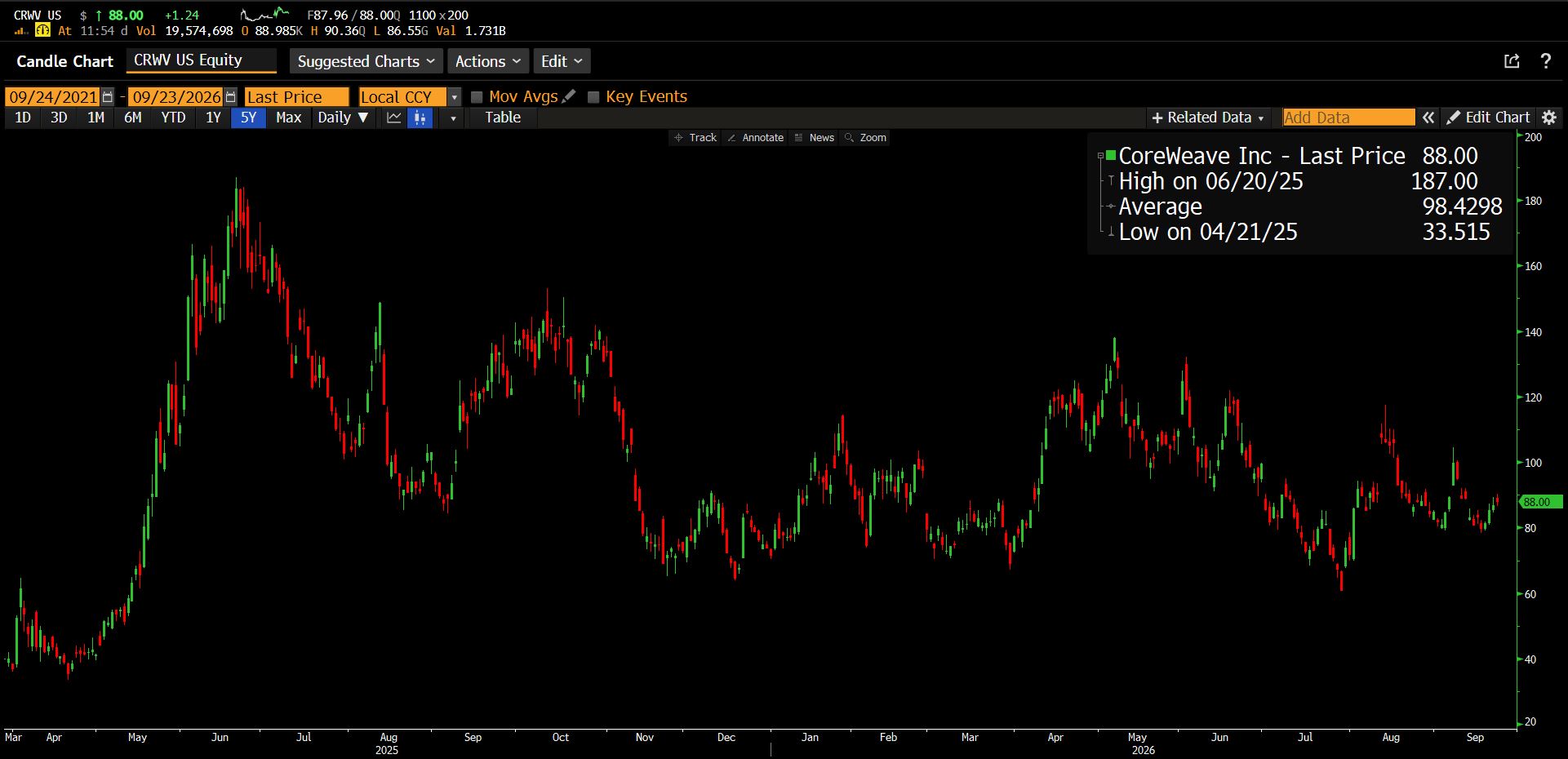
CoreWeave Inc. Daily Candlestick Chart Through September 23, 2026
Courtesy Bloomberg LP
CoreWeave reached $187 in June 2025 on the chart. On September 23, 2026, it was at $88.
Spencer’s concern is the amount of money the company was borrowing and raising while building out the business. His point isn’t that an AI company can’t eventually make money. It’s that the excitement around the industry doesn’t make questions about cash flow disappear.
A company can have a good idea behind it. Investors can still pay a lot for that idea.
Mistake 4: Gambling Instead of Investing
This is where some of the five mistakes start running together.
An investor gets obsessed with something, sees the price moving and wants more exposure. Maybe leverage gets added. Maybe the time horizon gets shorter. At some point, the decision can shift from investing in the underlying asset toward speculation on where the price goes next.
Leverage raises the stakes by using borrowed money or certain financial products to make a bigger investment than you could with your own money alone, which can make both gains and losses larger.
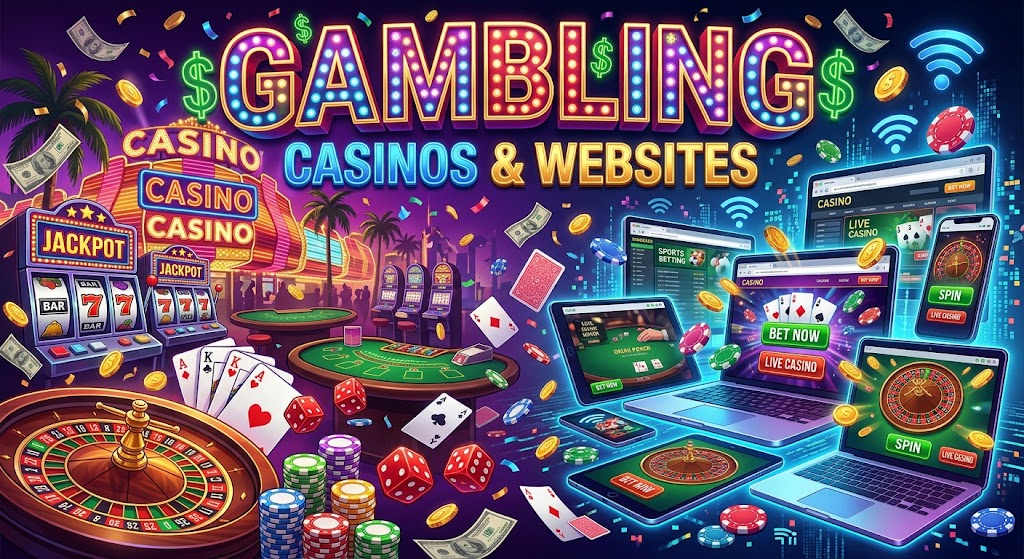
Conceptual Illustration of Physical and Online Gambling
Courtesy Google’s Gemini AI
Why Leveraged Products and Short-Term Trading Often Backfire
Then there are products that build leverage into the investment itself.
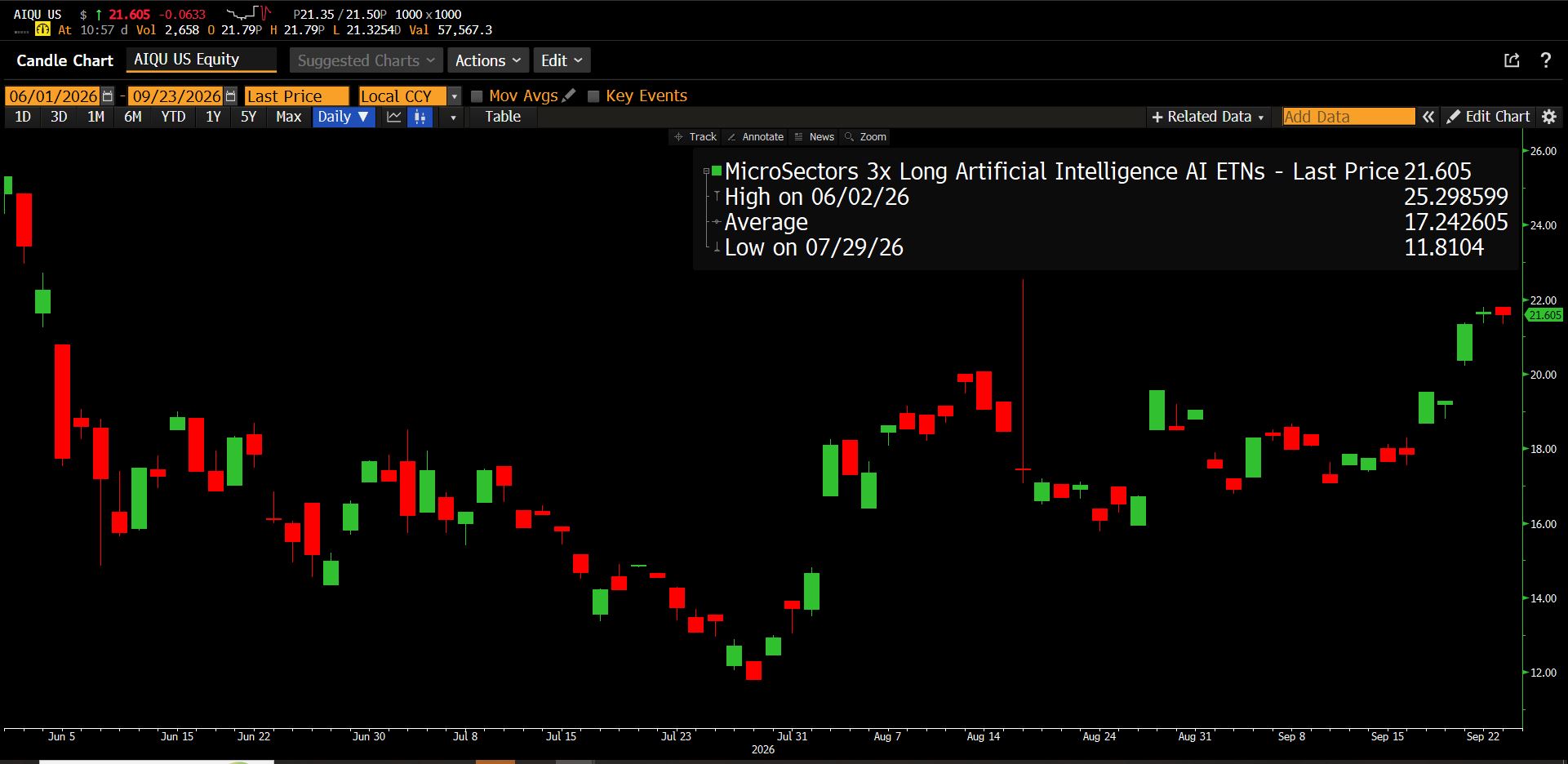
Spencer and Alex look at a MicroSectors 3x Long Artificial Intelligence ETN. An ETN, or exchange-traded note, is a debt security designed to track an index or strategy. This particular ETN uses leverage and derivatives to target three times the daily performance of its benchmark. Derivatives are financial contracts whose value is based on something else, such as a stock, index or other asset.
MicroSectors 3x Long Artificial Intelligence ETNs Daily Candlestick Chart, June-September 2026
Courtesy of Bloomberg LP
Alex gets into some of the math behind these products in the video, including how derivatives change in value over time. Derivatives are contracts between parties whose value depends on the price or performance of an underlying asset, index, or rate. Some of these contracts have expiration dates, and part of their price can come from the time remaining before they expire. As that time runs out, that portion of the contract’s value can shrink. Replacing expiring contracts can also add costs.
There’s also the way daily gains and losses compound over time. Targeting three times a daily move isn’t the same thing as taking an investment’s return over several months or years and multiplying it by three.
Leveraged products aren’t the only place investors can get caught up in the possibility of big returns. Spencer also looks at crypto, where dramatic price swings and speculation can blur the line between investing and gambling.
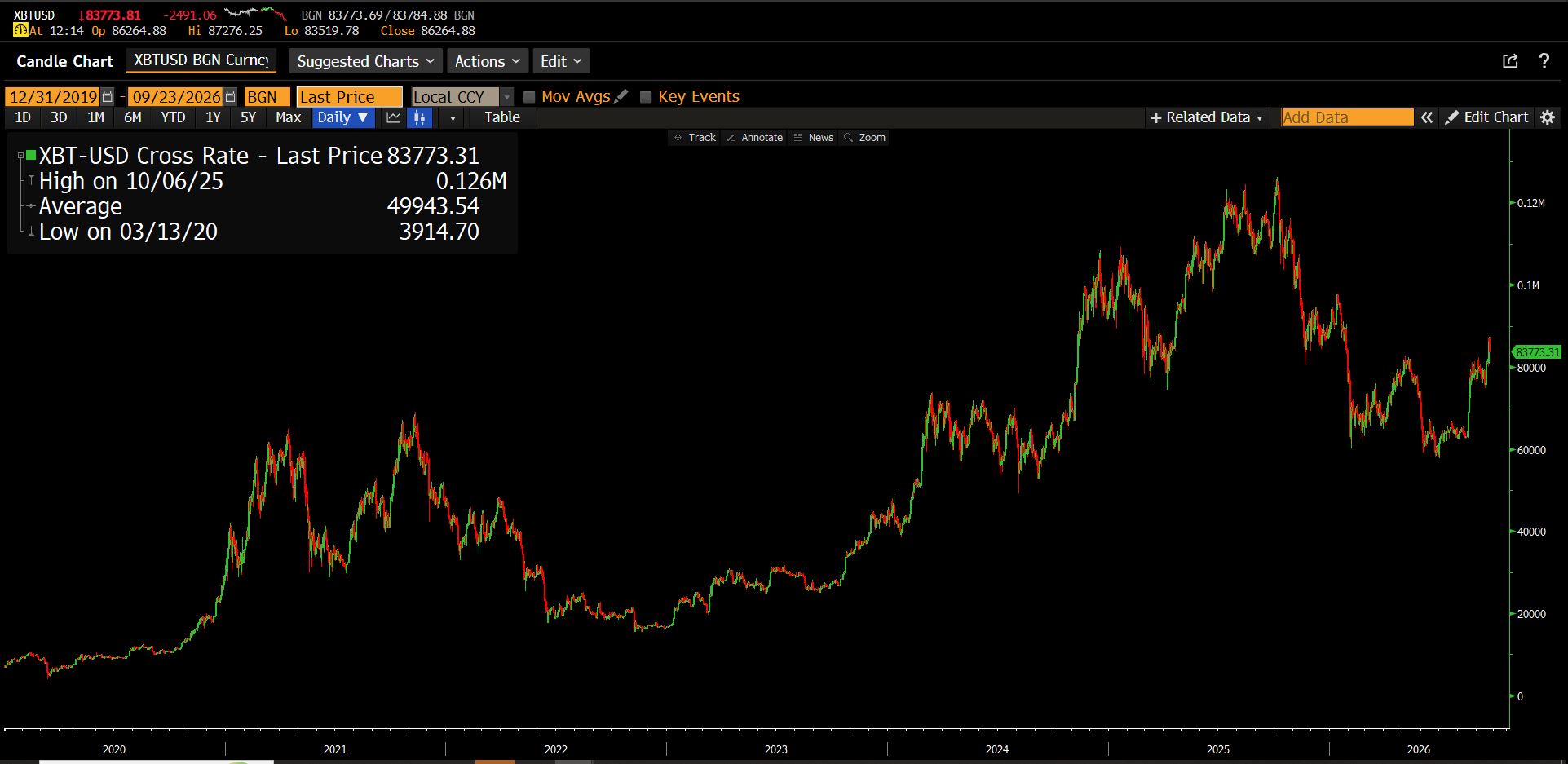
XBT-USD Cross Rate Daily Candlestick Chart, December 2019-September 2026
Courtesy Bloomberg LP
XBT represents Bitcoin and USD represents U.S. dollars, so the chart tracks Bitcoin’s price in dollars.
Bitcoin had some enormous moves during this period. Spencer points back to 2021, when speculation was high and leverage was becoming a bigger part of crypto trading. Then came 2022 and another major decline.
Bitcoin wasn’t the only cryptocurrency drawing money.
Polkadot Daily Candlestick Chart, January 2021-September 2026

Courtesy of Bloomberg LP
Polkadot gives another example of how dramatic those swings can be. After much higher prices earlier in its history, the chart shows a low of 0.72 in August 2026.
The temptation with something that has already moved dramatically is easy to understand. A relatively small investment looks like it could turn into a lot of money. That doesn’t make the risk on the other side go away.
Mistake 5: Believing What “Just Ain’t So”
Some ideas get repeated enough that they start sounding like facts.
Spencer turns this part of the video into a game of “true, not true.” The point is to actually check the assumption.
AT&T Inc. Daily Candlestick Chart, September 1996-September 2026

Courtesy of Bloomberg LP
AT&T is one of the most recognizable names in telecommunications. But the chart looks very different from what someone might expect if they simply assumed a large, familiar company would keep growing.
The chart reaches a high of 44.77 in January 1999. On September 23, 2026, the price shown is 25.50. As Spencer points out, that price comparison doesn’t include dividends.
In the video, Spencer questions whether AT&T was actually the growth company or top performer someone might have assumed it was. His answer is no. He describes it as an example of what he considers a “value trap.”
Another example is the idea that a leveraged investment should simply multiply the long-term return of the investment it tracks.
Comparative Chart of Tesla Inc. and the Direxion Daily TSLA Bull 2X ETF, August 2022-September 2026

Courtesy Bloomberg LP
The white line is Tesla. The other series tracks the leveraged product, which targets two times Tesla’s daily performance.
If “2x” meant twice Tesla’s return over any length of time, the two lines should tell a fairly simple story. They don’t.
There are assumptions about entire markets, too.
Generic first "CL" Crude Oil Futures Daily Candlestick Chart, December 1999-September 2026

Courtesy of Bloomberg LP
For years, saying oil couldn’t go below zero probably sounded perfectly reasonable. Then April 2020 happened.
The chart records a low of -40.32 on April 20, 2020.
Markets don’t particularly care what seems obvious. That’s why old assumptions are worth checking, especially when a financial decision depends on them.
How to Avoid These Investing Mistakes
Nobody gets every investment decision right. Spencer says as much in the video. The better question is whether there is a plan in place when something doesn’t work the way you expected.
A few places to start:
- Obsession: Ask yourself what would actually change your mind about an investment.
- Overspending: Before a big purchase, look at what it will cost you now and what it will keep costing you.
- Overpaying: Don’t stop at the story around a company. Look at what it’s earning, its cash flow and what you’re being asked to pay for it.
- Gambling: If leverage, derivatives or short-term trading are involved, make sure you understand what you’re getting into.
- Believing what “just ain’t so”: Go back and check the numbers, especially when something about an investment seems obviously true.
Those questions won’t remove market risk. They can help keep one decision from becoming the whole financial plan.
Frequently Asked Questions About Investing Mistakes
What is the biggest mistake investors make?
Spencer doesn’t narrow it down to just one. He focuses on five throughout the video: obsession, overspending, overpaying, gambling, and believing what “just ain’t so.” The bigger problem is when one of those starts affecting the rest of your financial plan.
Why is it a mistake to put too much money in one stock?
Because you’re depending pretty heavily on what happens to that one company. The same goes for putting too much into one sector or investment theme. QQQ is the example Spencer uses from the dot-com era. After its run-up, it fell almost 90% from its peak and took roughly 15 years to make a new high.
How does overspending hurt long-term investing?
It’s not always the initial price tag that causes trouble. A big purchase can keep costing money through financing, taxes, insurance, and maintenance. Spencer’s second-home example comes back to that monthly cash flow. Before taking on the expense, you have to know whether the numbers still work afterward.
What does it mean to overpay for a stock?
A company can have a great story behind it and still be expensive. Overpaying means the stock’s price is high compared with things like the company’s earnings, sales and financial health. That’s why Spencer looks beyond the excitement around nuclear and AI when discussing Oklo and CoreWeave.
What is the difference between investing and gambling?
For Spencer, part of the difference is what the decision is based on. Are you looking at the business, its cash flow and how the investment fits into your financial plan? Or are you mostly betting on where the price goes next? Short-term trading and leverage can push things further in that direction.
Are leveraged ETFs and ETNs good for long-term investors?
It depends on what you’re buying and what you’re trying to do with it. The big thing to understand from Spencer and Alex’s examples is daily performance. A product targeting two or three times a daily move won’t necessarily deliver two or three times the underlying investment’s return over a longer period.
How can I avoid common investing mistakes?
Ask questions before the decision gets difficult. Why do you own the investment? What would make you change your mind? What are you paying for it? Can your cash flow handle the purchase you’re considering? And if leverage or derivatives are involved, make sure you understand how they work.
Should I work with a financial advisor to avoid these mistakes?
A financial advisor can provide another perspective on investment decisions and help look at them alongside the rest of your financial plan. That doesn’t eliminate investment risk or guarantee better results. If you’re considering working with an advisor, look at their experience, services, fees, and approach to see whether they’re a good fit for what you need.
Financial Research Round Up!
Start the Process Today! Be sure to indicate what size portfolio sample you would like to see. A link will arrive when we receive your questionnaire.
Start the process of updating your investment plan today.